You have seen the cars on Jiji and in the local yards, priced somewhere around $6,000 to $9,000, and you keep asking the same question: can you get something better, straight from Japan, for the same money? The honest answer is yes. But the sticker price is not the landed price, and understanding that gap before you fall for a model is the most useful thing this guide can do.
Quick Answer
- Tanzania's used car market reached roughly USD 0.85 billion in 2026, with hatchbacks making up nearly 47% of it in 2025 (Mordor Intelligence, 2025).
- The most reliable budget picks in this bracket are the Toyota Aqua, Honda Fit, Suzuki Swift, Toyota Vitz and Nissan Note, all importable with an all-inclusive listed price under $10,000.
- That listed price covers the car, RoRo shipping to Dar es Salaam and JEVIC pre-shipment inspection. Import duty, excise and other taxes are paid to the TRA (Tanzania Revenue Authority) on arrival.
- Finance Act 2026 (in effect from 1 July 2026) reset the age-based excise bands (The Citizen, 2026). Vehicles under 8 years old carry the lowest exposure. Check the "Estimated landed cost" panel on any vehicle page for your real number.
- Japanese brands dominate Tanzania's used car market, led by Toyota, Honda and Nissan, so parts and mechanics are close at hand.
What Does "Under $10,000" Actually Mean?
Tanzania's used car market reached USD 0.85 billion in 2026 (Mordor Intelligence, 2025), and most of that spending goes on imported Japanese cars. A car listed at $8,000 does not land in Dar es Salaam for $8,000. The listed price and the on-road cost are two different numbers, and confusing them is the single most common budgeting mistake buyers make.
The all-inclusive listed price covers three things: the vehicle itself, RoRo (Roll-on/Roll-off vessel) freight from Japan to Dar es Salaam, and JEVIC pre-shipment inspection (a Japanese vehicle roadworthiness and mileage check completed before the car leaves port). That is everything up to the quayside.
What it does not include is import duty, excise, VAT and customs clearance. Those are assessed and paid to the TRA when the car arrives. Budget for the listed price plus a duty and tax layer on top.
You do not have to guess that layer. Every live listing carries an "Estimated landed cost in Tanzania" panel that breaks the taxes down line by line for that specific car. For the rules behind those figures, see the Tanzania import rules page.
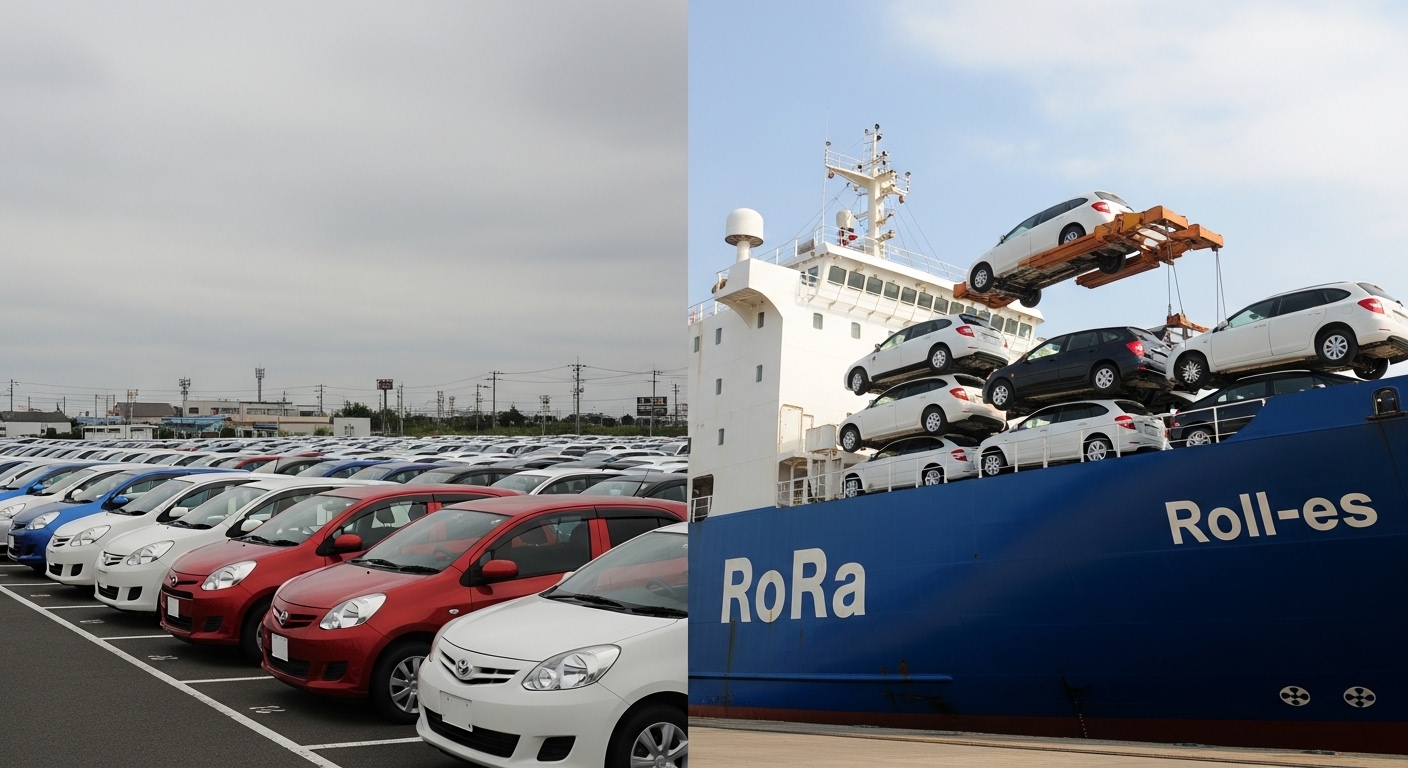 The listed price covers the car, shipping and inspection; duty is added on arrival in Tanzania.
Why Do Engine Size and Age Shape Your Landed Cost?
Two variables shape your true landed cost more than anything else on a tight budget: engine displacement and manufacture year. Finance Act 2026, effective 1 July 2026, reset the excise structure and introduced a new 5% excise on sub-1,000cc engines that were previously exempt (The Citizen, 2026). If you have read older guides, that change matters.
CIF value is the Cost, Insurance and Freight price — the vehicle cost plus shipping and insurance — used as the duty base. Import duty is charged at 25% of the CIF value on every eligible vehicle, as published on the Tanzania import rules page. Engine excise then stacks on top, banded by displacement. All five cars below sit in the common small-engine tier, so on excise they behave similarly.
| Tax component |
Rate |
Notes |
| Import duty |
25% of CIF value |
Applied on every eligible vehicle |
| Engine excise |
Banded 0–10% by cc |
Finance Act 2026 added 5% excise on sub-1,000cc engines, removing the previous exemption |
| Age excise |
Banded by age at arrival |
Lowest for cars under 8 years old; rises for older vehicles |
Figures as published on Carbarn's import rules page. Finance Act 2026 (effective 1 July 2026) updated the age-excise bands. Use the vehicle page's "Estimated landed cost" panel for the figure that applies to your specific car.
Age is the variable most buyers underrate. Finance Act 2026 raised the excise on older vehicles, reportedly climbing toward 40% for cars over 20 years old. The practical takeaway is simple: a vehicle under 8 years old at arrival carries the lowest exposure.
You can see this play out in the landed-cost panels. A 2019 Aqua, still inside the 8-year window, shows no age levy at all. A 2017 unit already carries one. That is the whole argument for aiming at 2018 or newer where your budget stretches to it.
Because news-reported rates and the published page can lag each other, do not treat any single percentage as your final figure. The "Estimated landed cost" panel on each vehicle page is the number that actually applies to that car.
Which Reliable Japanese Cars Under $10,000 Are Worth Importing?
Hatchbacks made up almost 47% of Tanzania's used car market in 2025 (Mordor Intelligence, 2025), and for good reason: they suit Dar es Salaam traffic, sip fuel, and keep duty modest. The five below cover the widest range of real buyer needs, from a solo city commuter to a growing family. All sit in the small-engine tier and all have settled parts supply in Tanzania. Where the budget allows, aim for 2018 or newer to stay inside the 8-year age window.
| Model |
Engine |
Approx. USD band |
Best for |
Age note |
| Toyota Aqua |
1500cc hybrid |
around $4,000–$8,000 |
City fuel economy |
2018+ stays inside 8-year window |
| Honda Fit |
1300–1500cc hybrid/petrol |
around $5,000–$7,500 |
Interior flexibility |
Hybrids from 2013 onward |
| Suzuki Swift |
1200cc petrol |
around $3,500–$6,500 |
Lowest running costs |
Strong 2014–2018 supply |
| Toyota Vitz |
1000–1300cc petrol |
around $4,000–$7,000 |
Low-drama simplicity |
Sub-1,000cc now carries 5% excise |
| Nissan Note |
1200cc petrol/hybrid |
around $4,000–$7,000 |
Most cabin space |
Hybrids from late 2016 |
USD bands are general guidance only. Click a model link for live listings and the real number.
Toyota Aqua: The Hatchback That Makes Sense in Dar Traffic
The Toyota Aqua is the most requested car in Tanzania's Japanese-import segment, and for daily use in Dar es Salaam that reputation is earned. Its petrol-electric hybrid does its best work in exactly the stop-start crawl that defines a Kariakoo or Kariboni commute, where a normal petrol engine wastes the most fuel.
Under the bonnet sits a 1500cc hybrid drivetrain: the 1NZ-FXE engine rated at around 74 PS, driving the front wheels through an automatic transmission. It seats five and returns up to about 35.4 km/L on Japan's JC08 test cycle. Real-world figures run nearer 20 to 25 km/L in Tanzanian city driving (AutoMag.tz, 2025). Running gear is shared with the Prius family, so parts and hybrid know-how are widely available. Grades of 3.5 to 4.0 are common in the lower part of the band, with 2019 to 2022 cars sitting higher.
Buyer fit: a strong choice if most of your driving is in town. If you cover long highway stretches or regularly seat five adults, the compact cabin is worth noting.
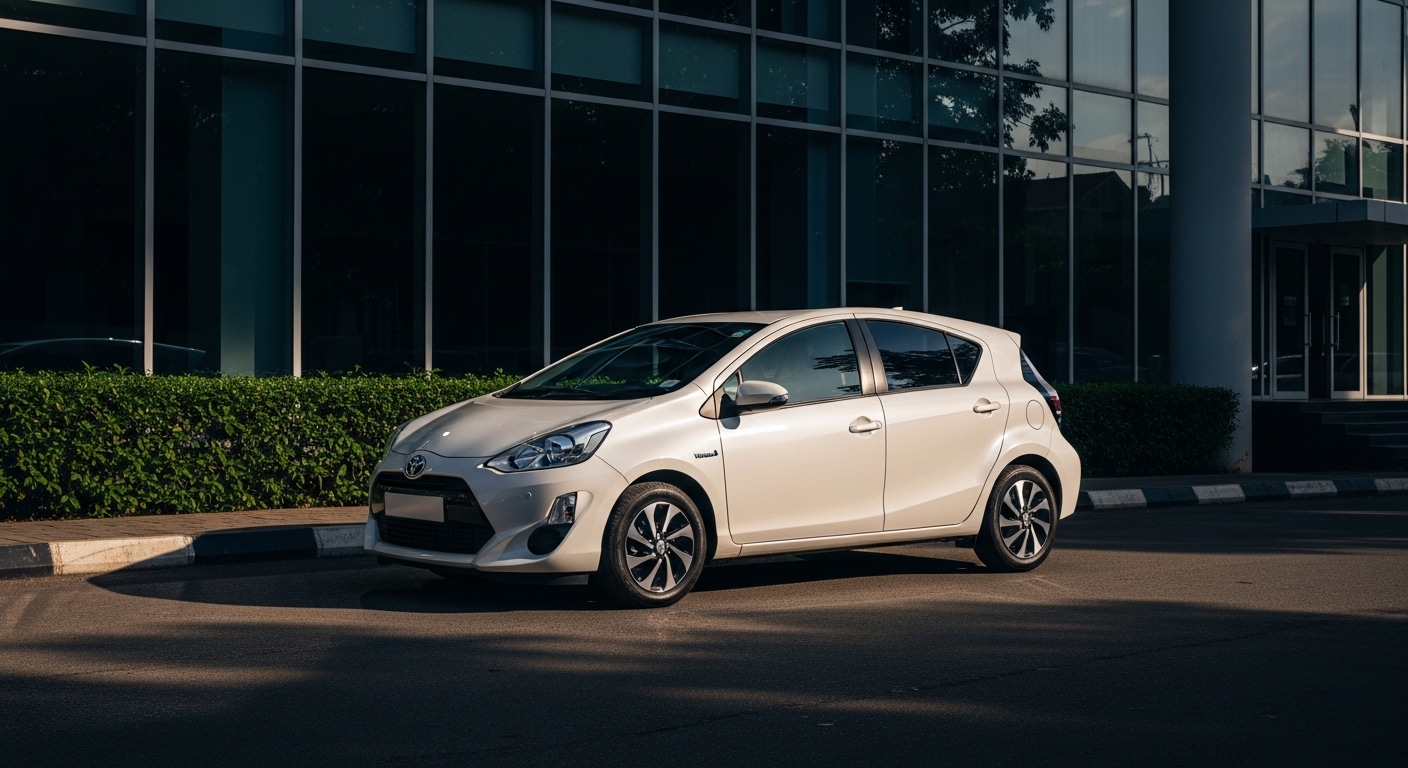 The Toyota Aqua's hybrid system is built for stop-start Dar es Salaam traffic.
Honda Fit: Practical, Parts-Available, and Proven
The Honda Fit earns its place through interior design that punches well above its footprint. Its centre-mounted fuel tank frees up a low, flat floor. The "Magic Seat" system then folds in ways no rival in this bracket can match, so a small hatch swallows awkward loads that would defeat a larger saloon.
Current listings run a 1300cc or 1500cc engine in petrol form, and 1500cc in hybrid form. The 1500cc hybrid variant returns around 36.4 km/L on Japan's JC08 test cycle (Honda JP specification), with real-world figures of roughly 20 to 25 km/L reported on Tanzanian roads (AutoMag.tz, 2025). Hybrid variants, available from around 2013, are the ones to target for fuel economy; petrol-only cars offer a lower entry price. Parts are broadly available, though slightly harder to source than Toyota once you leave Dar es Salaam.
Buyer fit: ideal if you regularly haul shopping, tools or equipment. For pure city-traffic fuel saving, the Aqua's hybrid still leads. It is one of the more fuel-efficient options in this bracket all the same.
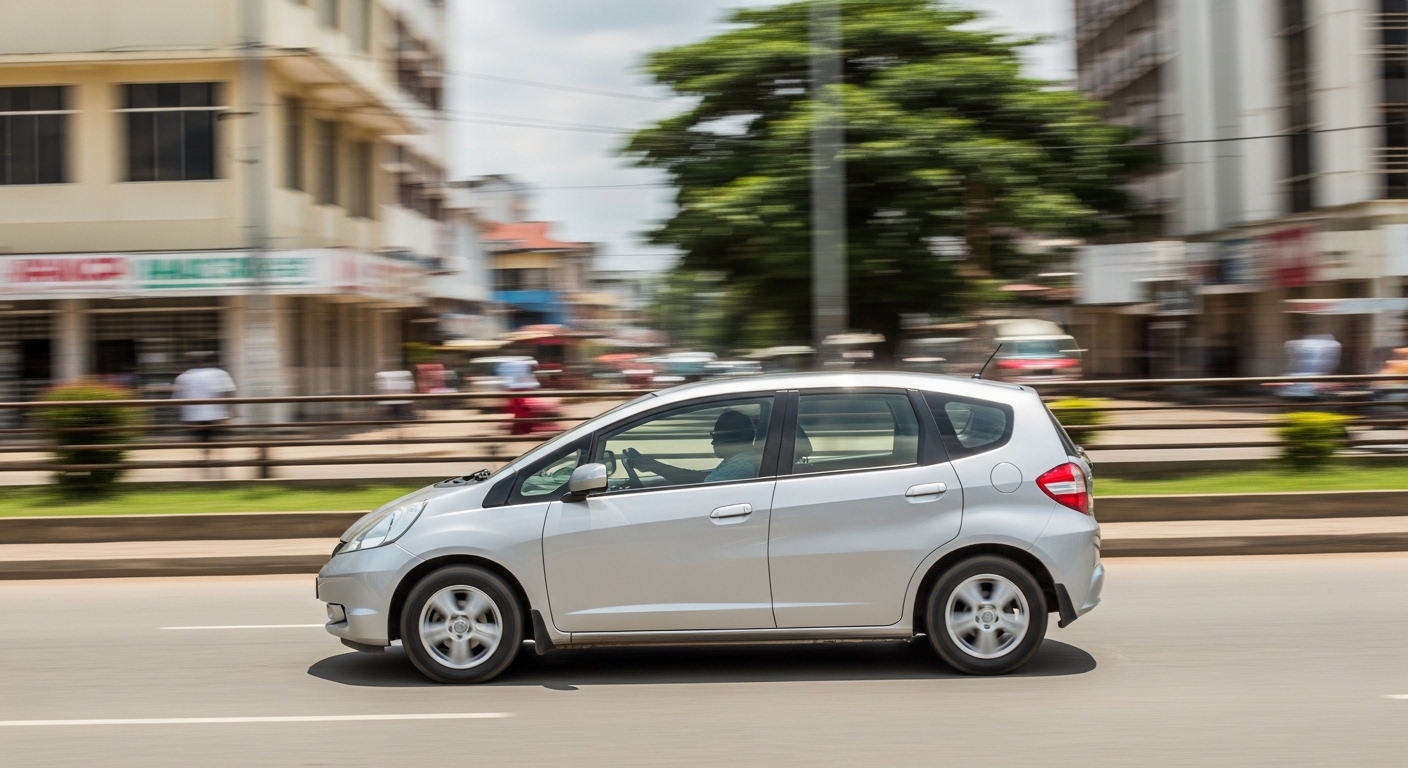 The Honda Fit's clever packaging makes it feel bigger inside than it looks outside.
Suzuki Swift: The Lightest Bill in This Bracket
If keeping total cost of ownership down is your priority, the Suzuki Swift is the one to examine most closely. Its 1200cc petrol engine sits in the same excise band as the 1500cc cars, but its lower CIF value means a smaller base for the 25% import duty. The whole duty stack starts from a lower number.
It is also the lightest car here, which shows up as gentler tyre and brake wear and modest fuel use over a year. Grades of 4.0 to 4.5 turn up on 2014 to 2018 units at competitive prices, and one recent low-mileage listing carried a grade 4.5. The tidy footprint slots into tight Dar es Salaam parking without drama.
Buyer fit: right for a solo commuter or a couple driving mostly in the city. It is not the pick if you often carry four adults or need serious boot space.
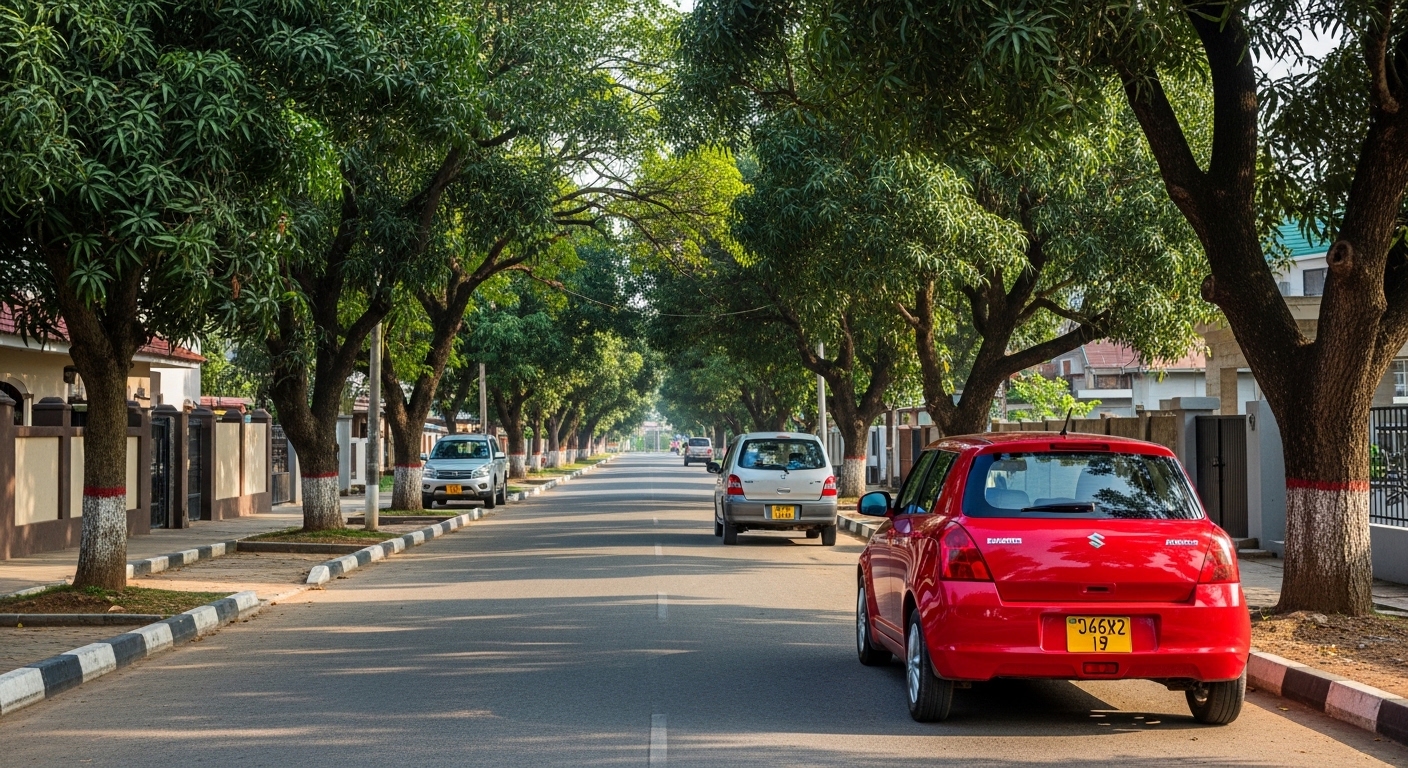 Light and compact, the Swift is the easiest car here to live with in the city.
Toyota Vitz: Simple, Cheap to Run, Easy to Maintain
The Toyota Vitz, sold in some markets as the Yaris, is the choice for buyers who want Toyota reliability without a hybrid battery to think about. Its petrol drivetrain is about as uncomplicated as a modern car gets: no high-voltage system, no complex electronics, and a parts network that is the most developed of any brand in Tanzania.
Engines run from 1000cc up to about 1300cc depending on the variant. The 998cc version used to attract zero engine excise, but Finance Act 2026 introduced a 5% excise on sub-1,000cc engines — so that old advantage has narrowed. Watch the manufacture date too. Many cheap Vitz units are 2012 to 2015 cars, already 10 or more years old at a 2026 arrival, and they face a higher age band as a result.
Buyer fit: excellent for lowest-drama, lowest-cost ownership around town. Less suited to long open-road trips or heavy loads.
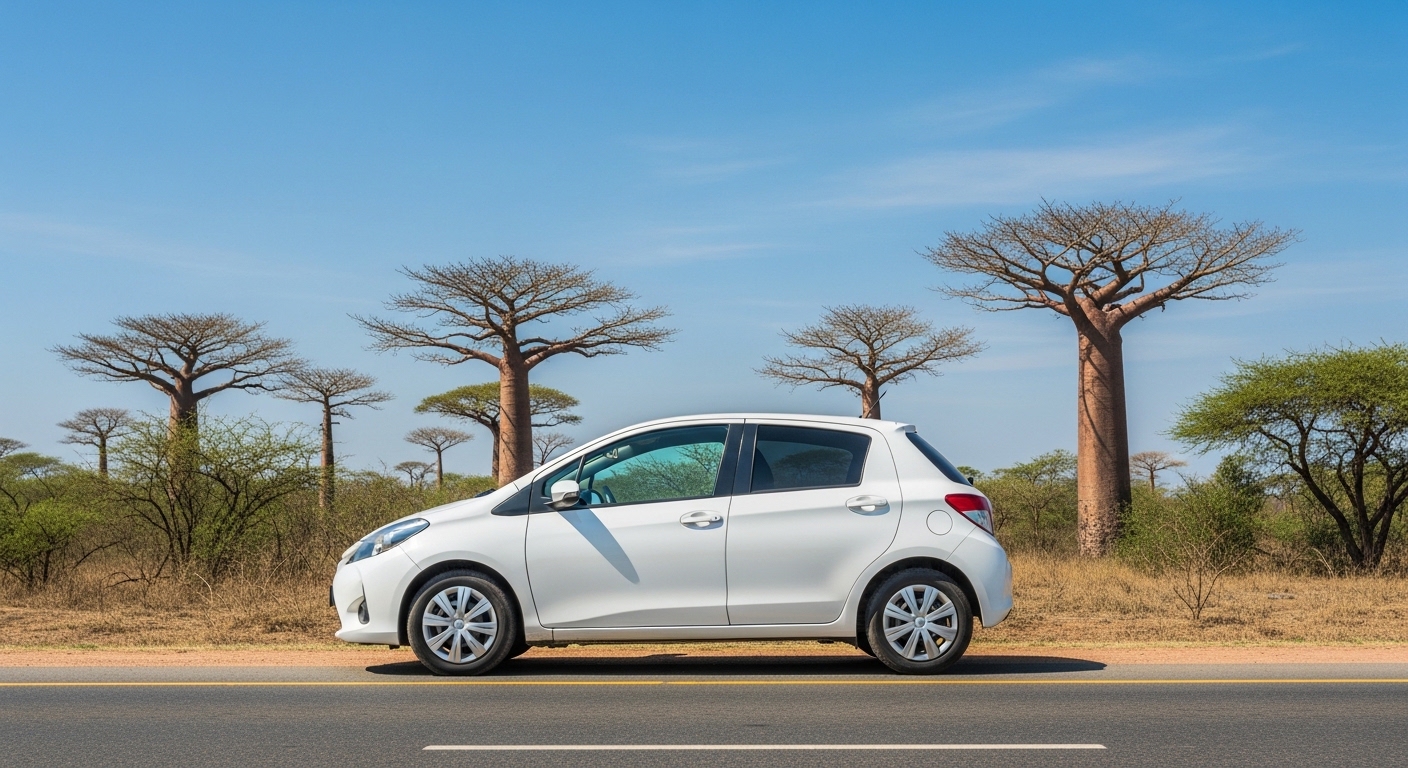 Simple, light and cheap to run, the Vitz keeps ownership low-drama.
Nissan Note: More Space, Still Under Budget
The Nissan Note offers the most cabin space of any car on this list without straying out of the sub-$10,000 band. Its tall roofline gives adult rear passengers real head and knee room. Taller drivers also get a more upright seating position than the lower-slung Aqua or Swift allows.
It uses a 1200cc engine in both petrol and e-POWER hybrid forms, with the hybrid arriving from late 2016. Petrol variants come in cheaper; the e-POWER hybrid adds meaningful fuel savings by driving the wheels on electric motors. Nissan is well established across Tanzania, though the network thins out relative to Toyota in rural areas.
Buyer fit: the best pick if you regularly carry three or four adults or have a growing family. For pure city fuel economy it does not quite match the Aqua's hybrid, so weigh space against sipping.
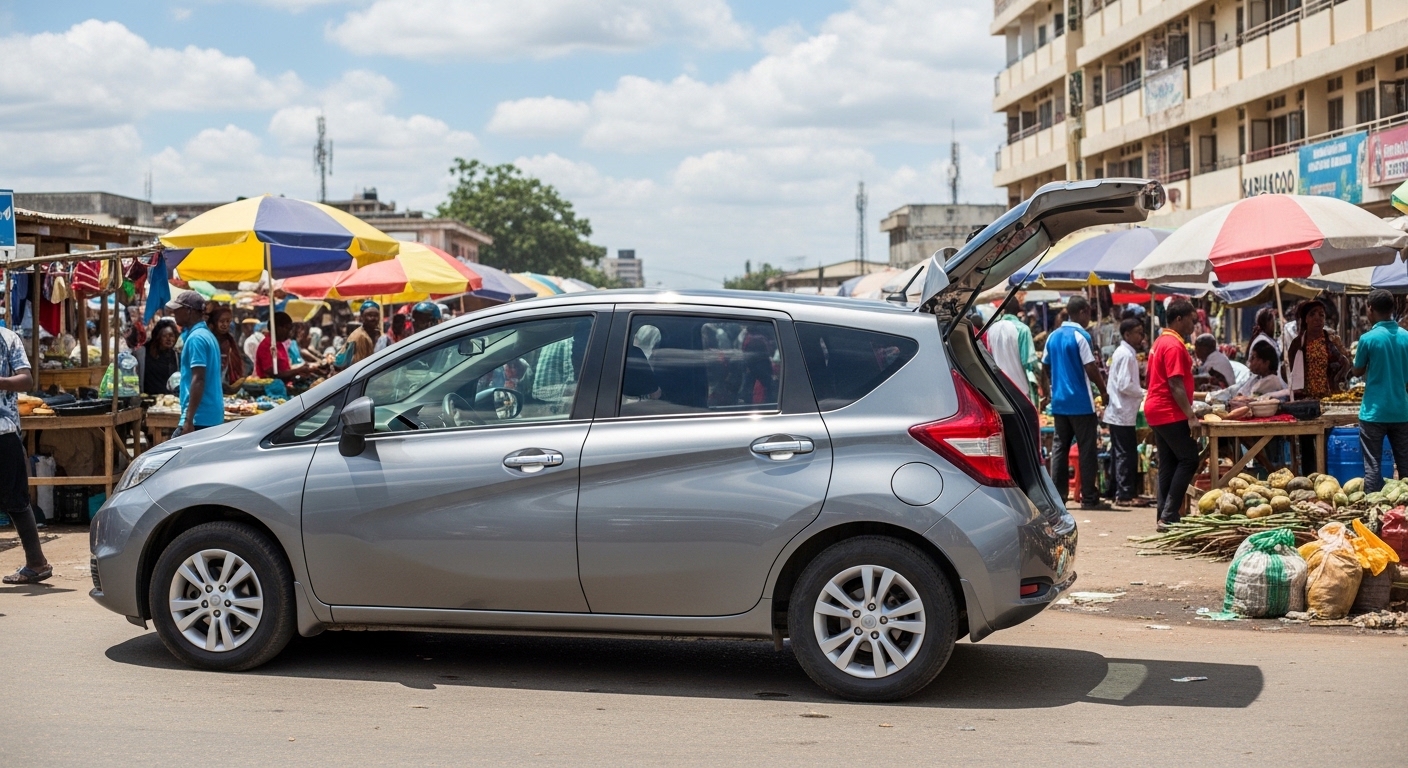 The Note gives you the most cabin room in this bracket, useful for a growing family.
What Should You Check on the Auction Sheet for a Budget Car?
An auction grade is the standardised condition score assigned by the Japanese auction house — and cars in the $4,000 to $7,000 range usually carry grades of 3.5 to 4.0 rather than 4.5 or 5. That is normal, not a warning sign. Tanzania is now among the largest destinations for Japanese used-car exports, drawing well over 13,000 units a month (TokyoCarZ, 2026). Plenty of good cars trade at these grades. Reading the sheet is the skill that protects you.
Grade 3.5 means light cosmetic wear, 4.0 means good overall condition, 4.5 is near-perfect, and 5 is new-equivalent and rare at this price. A grade 3.5 with low mileage will often serve you better than a tired grade 4.0 with high kilometres. The sheet shows both figures, so read them together.
The auction sheet itself covers exterior panels, interior condition, a rust assessment and mechanical notes, mapped onto a car diagram. Look at the detail, not just the headline number: a small mark on a rear bumper is a very different thing from a repaired structural panel.
The auction grade is a high-level snapshot, though. Every car here also comes with a separate in-house inspector's report that adds tyre-tread depths, underbody condition, interior smell and specific blemish notes. Together the two give a fuller picture than any single grade. When you are ready to see the full sequence, the how to buy guide walks through it.
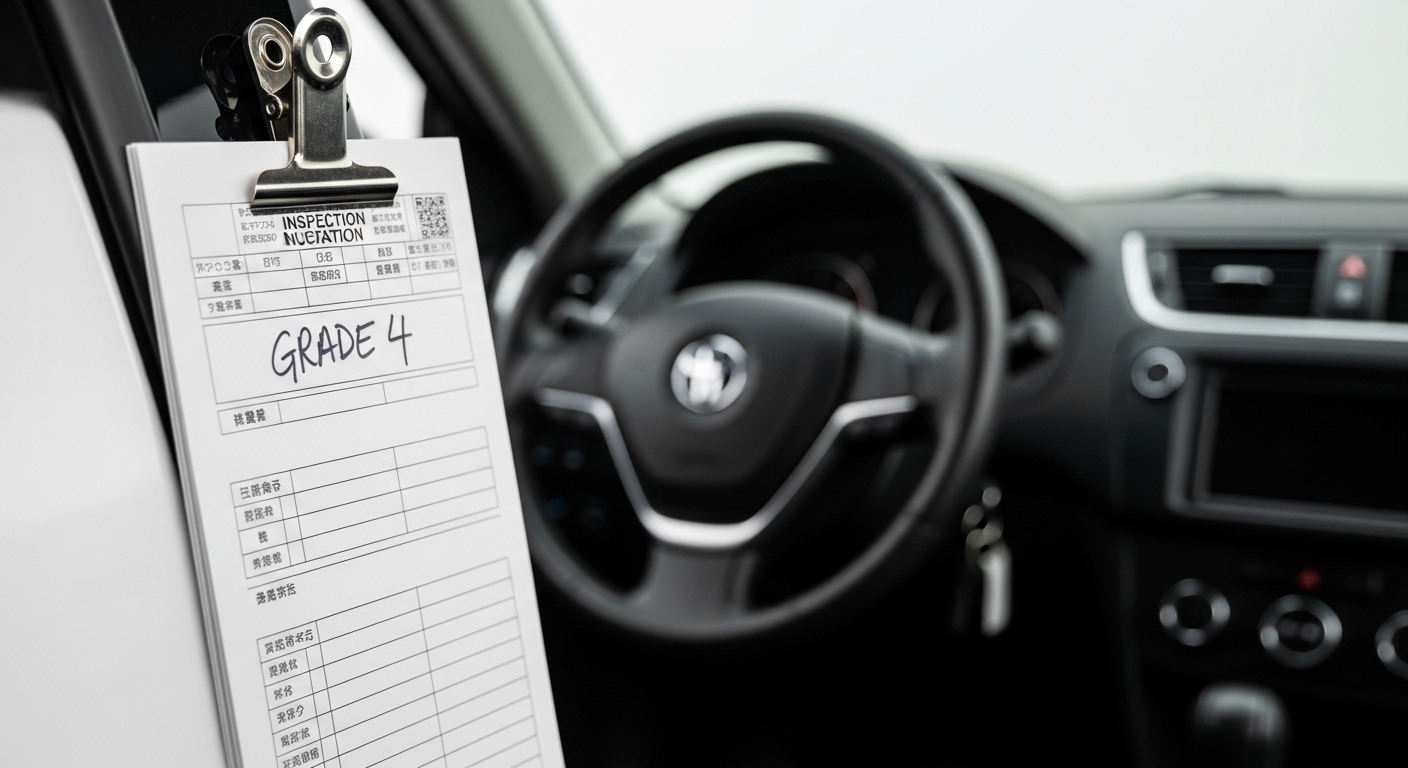 The auction sheet grades condition; read the detail, not just the headline number.
What Happens After You Buy: The Import Journey to Dar es Salaam?
The sea leg from Japan to Dar es Salaam typically runs around 28 to 42 days, and the rest of the journey follows a clear sequence. Knowing the order removes most of the anxiety first-time importers feel.
- You confirm the purchase and receive a proforma invoice — the official document that sets out the agreed price and carries the payment details.
- The car passes its JEVIC pre-shipment inspection at the Japanese yard.
- It is loaded onto a RoRo vessel and sails to Dar es Salaam over roughly 28 to 42 days.
- On arrival, the TRA assesses and collects import duty, excise, the age band and other taxes.
- An EAA roadworthiness check is completed for Tanzania before the car can be registered.
- Throughout, a self-service dashboard tracks your invoice, bill of lading and the vessel's live position.
The published timeline covers the sea transit window only — not a guaranteed door-to-door date, which depends on sailing schedules and port clearance. For the rules that govern arrival, the Tanzania import rules page and the how-to-buy guide are the right places to check.
How Carbarn Tanzania Sources These Cars
Carbarn Tanzania is the Tanzanian storefront of a Japanese-owned exporter based in Yokohama, and every car it lists is owned by Carbarn outright. There are no brokers in the middle and no third-party cancellations, so the car you choose is the car you get.
Vehicles are bought at Japanese auctions and shipped RoRo from Japan to Dar es Salaam. Before you pay, you see two condition reports: the official Japanese auction sheet, plus a separate in-house Carbarn inspector's report covering tyres, underbody and blemishes. JEVIC pre-shipment certification is standard on every unit.
The listed USD price is all-inclusive in the specific sense described above: it covers the car, the shipping and the inspection. Import duty, excise and clearance remain your responsibility to the TRA on arrival. The per-vehicle "Estimated landed cost" panel sizes those charges up front. A self-service dashboard then holds your invoice, bill of lading, certificates and live vessel tracking in one place.
Browse by brand — Toyota, Honda, Suzuki, Nissan — or start the process at carbarn.tz. Direct-from-Japan ownership, two verified inspection reports before payment, JEVIC certification, all-inclusive USD pricing, transparent per-vehicle landed-cost estimates, RoRo shipping to Dar es Salaam, and a dashboard that tracks your car from auction to arrival.


