A van can earn more money than a private car, but only when its size, condition and running costs match the work. A large van may handle shop supplies and construction tools well, yet feel awkward in Dar es Salaam traffic and tight loading areas.
A compact van can be easier to park and cheaper to operate, but it may struggle with bulky cargo or regional routes. This guide compares four Japanese used vans for business in Tanzania by load type, engine, drivetrain, condition and business fit. It also explains what to check in the auction sheet and inspection reports before importing.
Quick Answer
- Toyota HiAce suits heavier daily work, longer routes and larger cargo.
- Nissan Caravan/NV350 Caravan is a full-size alternative worth comparing by condition.
- Nissan NV200 Vanette fits parcels, shop deliveries and smaller loads.
- Mazda Bongo Brawny is a full-size commercial van with a HiAce-equivalent body format.
- Nissan Japan lists NV200 cargo volume from 3,550 to 4,000 litres, depending on seating and grade.
What should you look for in a business van in Tanzania?
The right business van carries your normal load without making every trip more difficult or expensive. As of 25 August 2026, the Toyota HiAce Tanzania category covered 14 vehicles from 2010 to 2024, showing why engine, body and drivetrain must be checked vehicle by vehicle.
Start with the cargo area. A panel van normally gives goods more room, while a passenger van may suit staff transport but leave less usable space. A dual-purpose layout can work for tools and people, but seats still reduce flexibility.
Engine size matters for both working costs and Tanzania’s import-cost calculation. Also check whether two-wheel drive suits your normal routes. Four-wheel drive may help on rough access roads, but it adds weight and is unnecessary for many urban deliveries.
Door operation matters more than many buyers expect. Check the sliding-door rollers, rear hinges, loading height and floor condition. A van that is difficult to load wastes time on every stop.
| Business need |
Best starting point |
Main strength |
Main trade-off |
| Heavy daily cargo |
Toyota HiAce |
Large commercial format |
Bigger footprint |
| Full-size delivery work |
Nissan Caravan/NV350 Caravan |
Strong cargo-focused alternative |
Compare condition carefully |
| Urban parcels and shop supply |
Nissan NV200 Vanette |
Easier movement in busy areas |
Less room for bulky loads |
| Full-size commercial work |
Mazda Bongo Brawny |
HiAce-equivalent body format |
Confirm maintenance support |
| Passenger-plus-cargo work |
Exact dual-purpose variant |
Flexible seating and storage |
Seats reduce cargo space |
Is the Toyota HiAce a strong choice for heavier business work?
The Toyota HiAce vans are a strong starting point for regular cargo work, longer routes and construction support. In 2026, Toyota Tanzania’s “HIACE” page describes the model as a commercial vehicle with engine choices for different uses, while the selected Japan vehicle lists a long-body, three-seat format (Toyota Tanzania HIACE, 2026).
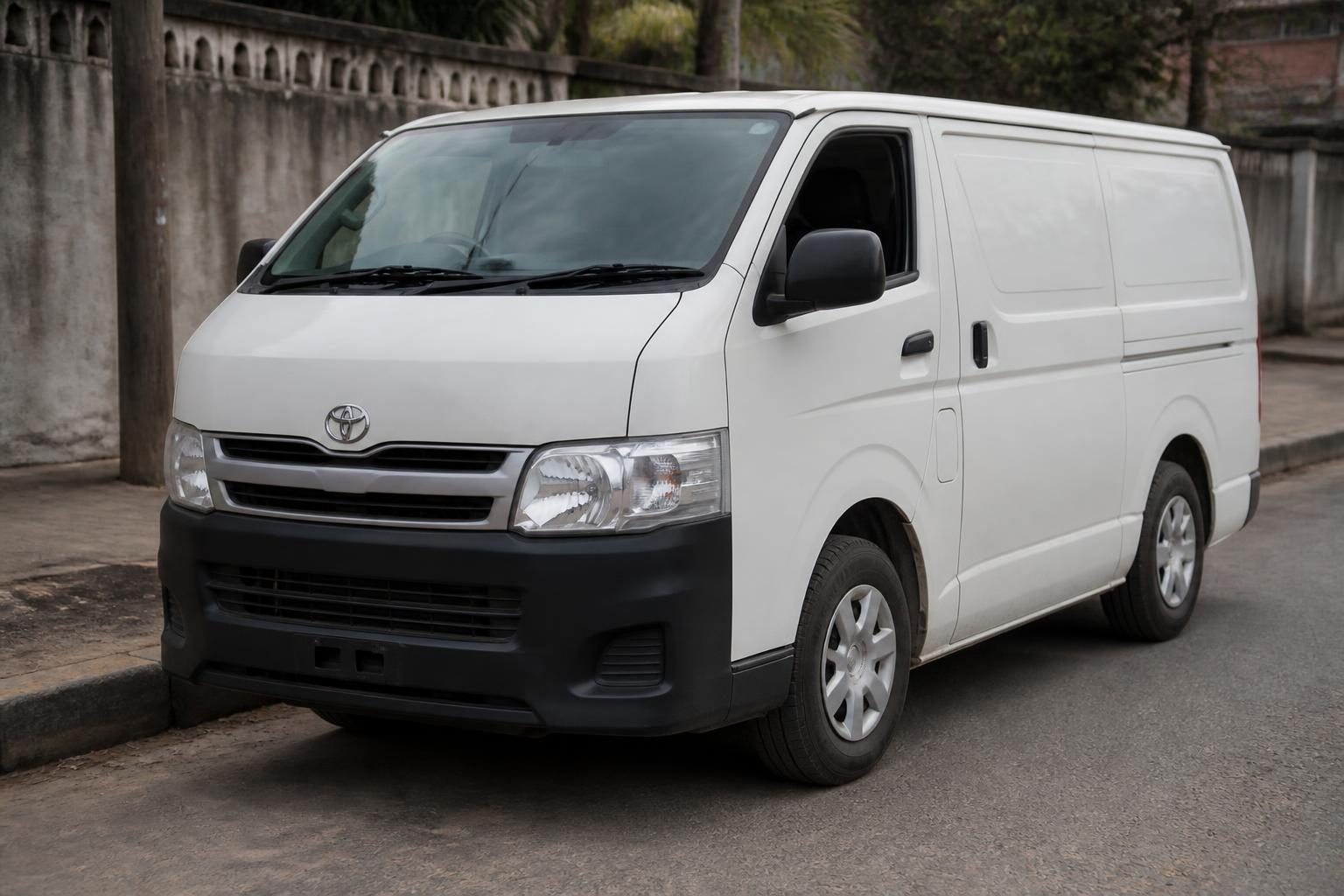 2021 Toyota HiAce
The 2021 Toyota HiAce VAN LONG DX 4WD has a 2,800cc diesel engine, automatic transmission, 4WD and model code GDH206V. Its odometer reads 117,000 kilometres, the auction grade is 3.5, and the vehicle page lists three seats. Use the manufacturer’s internal load dimensions, not the external body envelope, when estimating usable cargo space (“2021 Toyota Hiace in Tanzania, Price | Japan Stock”, 2026).
That combination prioritises cargo over passenger capacity. The 4WD system may help with rougher access roads, but it should not decide the purchase by itself. Larger dimensions can make crowded delivery areas harder, and the 2,800cc engine should be considered alongside the exact landed-cost estimate.
The Carbarn inspection report records no damage found, but an auction grade remains a screening indicator. A different 2020 HiAce page lists a 2,000cc petrol, RWD automatic with three seats, 123,000 kilometres and grade 3. The model name alone does not tell you enough.
Should you compare the Nissan Caravan/NV350 Caravan with the HiAce?
The Nissan Caravan/NV350 Caravan listings provide a full-size Japanese alternative for shop supply, tools and bulky goods. In 2026, the Nissan Caravan category showed two 2,500cc diesel, automatic, two-wheel-drive listings, with odometers of 119,000 and 150,000 kilometres.
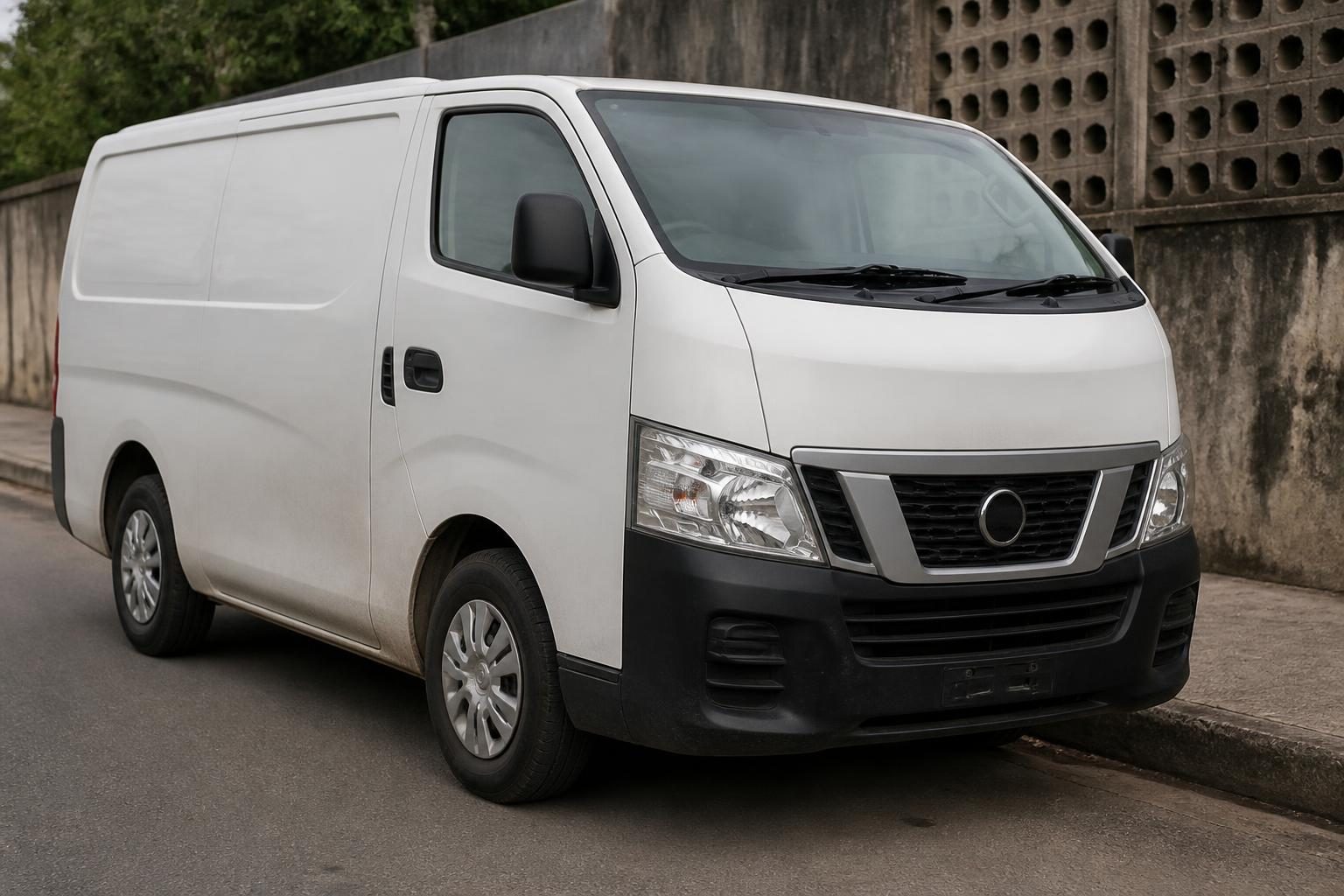 2020 Nissan Caravan
The selected 2020 Nissan Caravan VAN DX uses the YD25DDTi 2,500cc diesel engine and automatic transmission. It is RWD, has 119,000 kilometres and grade 3.5. The page’s zero-seat field is incomplete listing metadata, not a seating specification, so confirm the exact layout from the auction sheet, photographs and manufacturer data (“2020 Nissan Caravan in Tanzania, Price | Japan Stock”, 2026).
Its in-house inspection records light rear-panel and bumper marks, while the tyres are listed as good and the underbody clean. Those details matter because commercial use leaves clues beyond the odometer.
The related 2020 Nissan NV350 Caravan V shows why the name needs closer inspection. It has the same 2,500cc diesel and automatic layout, but 150,000 kilometres, grade 3.5 and six listed seats. Its inspection records rear-door dents and other exterior marks.
Compare the cargo floor, door rollers, suspension, tyres and previous repair marks. A full-size Caravan makes sense when the business needs volume, but condition should decide between individual vehicles.
Is the Nissan NV200 Vanette suitable for small-business deliveries?
The compact Nissan NV200 Vanette vans suit many-stop urban work better than a full-size van. In 2026, the listed 2024 vehicle has a 1,600cc petrol engine, CVT automatic transmission, FWD, five seats, grade 5 and 0 kilometres (“2024 Nissan Nv200 Vanette Van in Tanzania”, 2026).
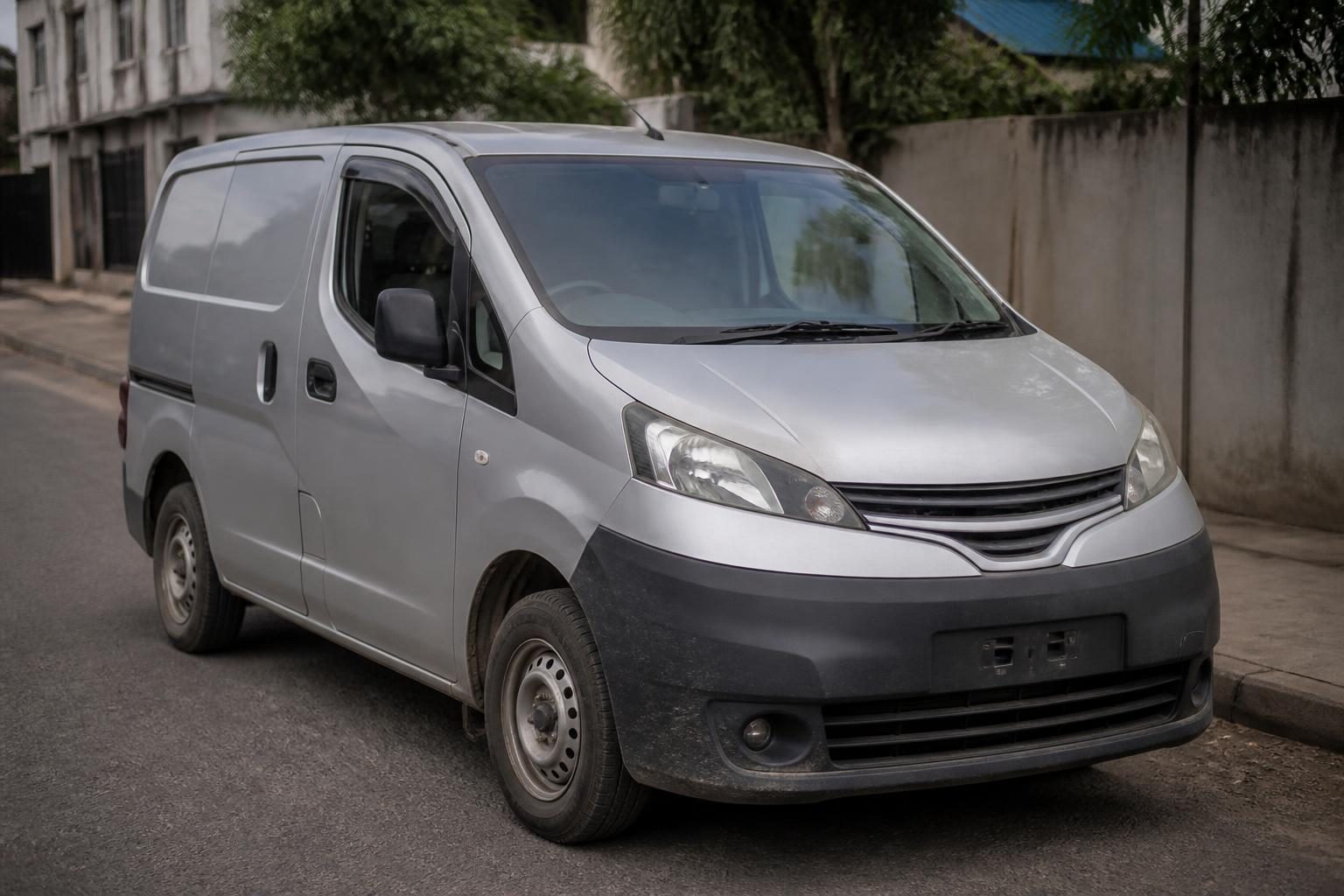 2024 Nissan NV200 Vanette Van
Its external dimensions are 4,400 by 1,695 by 1,855mm. That smaller footprint should make parking and turning easier around Dar es Salaam shops, pharmacies and delivery points. The five-seat layout, however, is not the same as a dedicated two-seat cargo van.
Nissan Japan lists 3,550 litres for certain five-seat versions, 3,700 litres for a DX five-seat layout and 4,000 litres for a DX two-seat 2WD layout. The same page lists a 1,220mm rear wheelhouse width and a 520mm 2WD floor height (Nissan Japan NV200 loadability specifications, 2026).
2024 Nissan NV200 Vanette Van
The smaller NV200 may protect cash flow better when the business carries parcels, food stock, tools or pharmacy supplies. Why pay to move empty space through traffic? It is less suitable for tall, heavy or high-volume cargo.
Is the Mazda Bongo Brawny a full-size commercial van?
The Mazda Bongo Brawny vans are full-size commercial vans with a HiAce-equivalent body format, rather than a middle ground between compact and full-size models. In 2026, the selected Japan vehicle lists a 2,000cc petrol engine, automatic transmission, RWD, 31,779 kilometres and grade 4 (“2021 Mazda Bongo Brawny Van in Tanzania”, 2026).
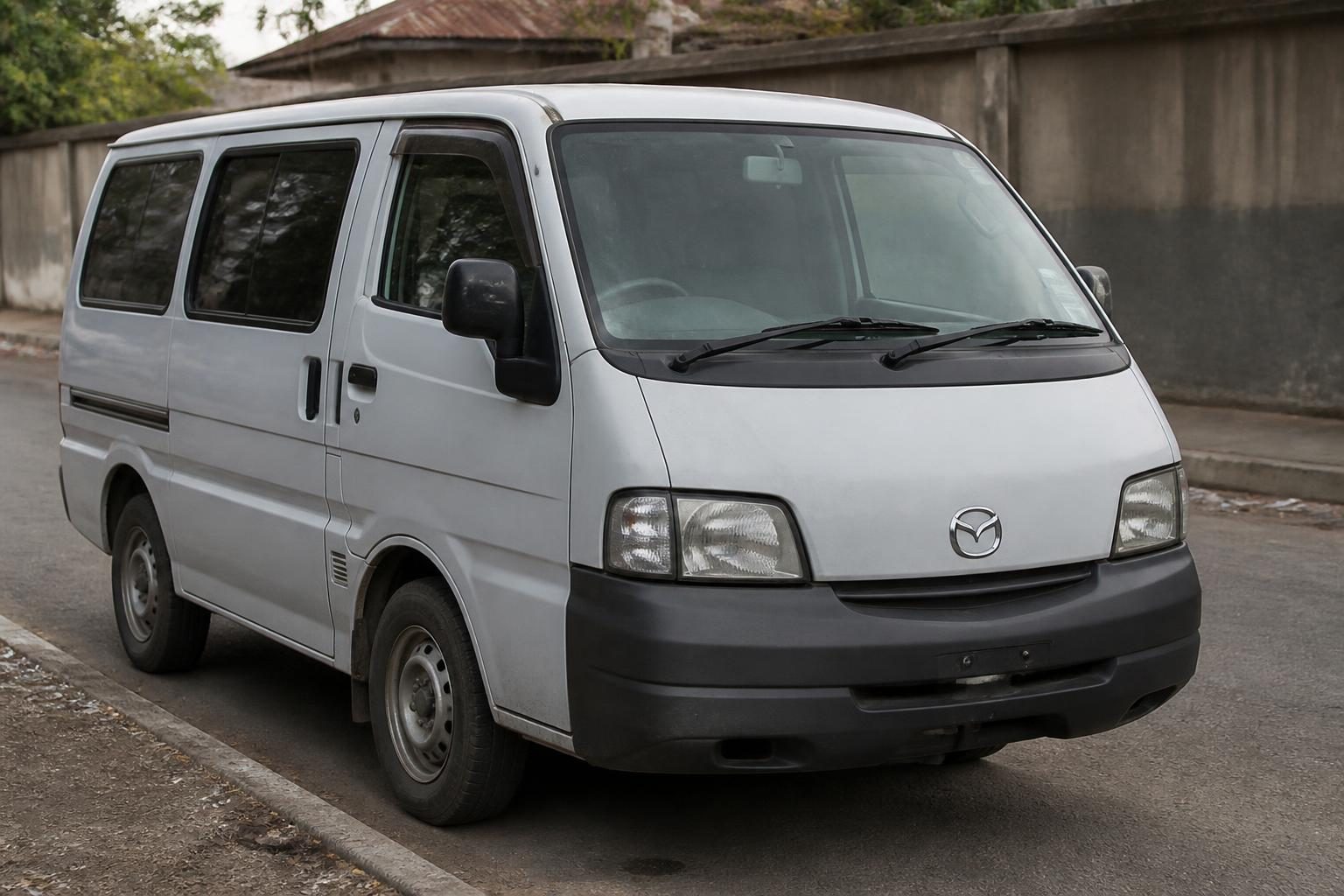 2021 Mazda Bongo Brawny Van
The page lists model code TRH200M, engine code 1TR-FE and a white five-door body. Its zero-seat field is incomplete listing metadata, not proof of a cargo-only layout. Confirm the exact seating and cargo layout from the auction sheet, photographs and manufacturer data.
Mazda’s official Japanese page places the Bongo Brawny within the 0.85 to 1.25-tonne commercial-van range. That is a model-range description, not the payload of this exact vehicle. Mazda also lists petrol and diesel 2WD versions, plus diesel 4WD variants (Mazda Bongo Brawny Van, 2026).
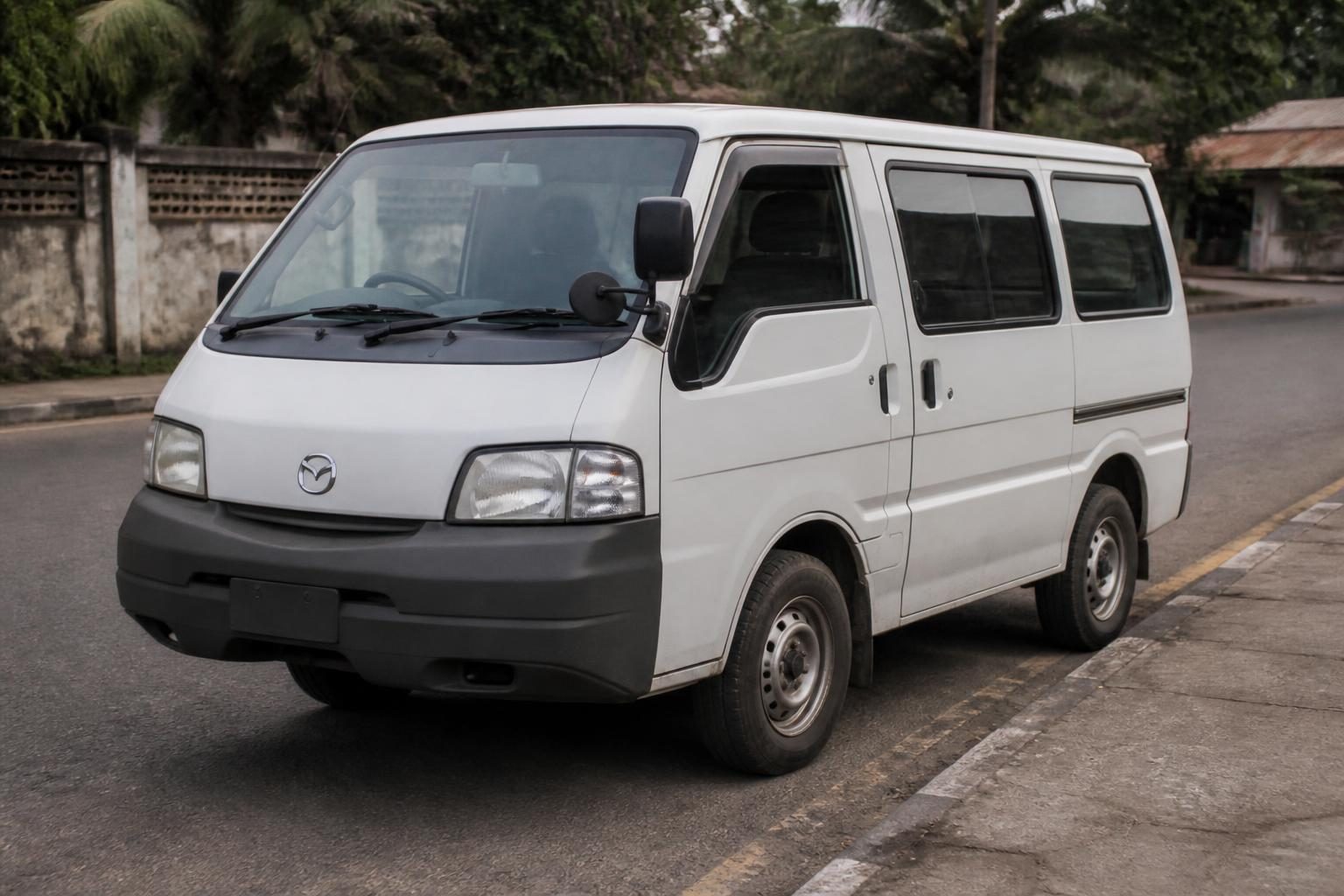 2021 Mazda Bongo Brawny Van
The Bongo Brawny is worth considering for a growing retailer, contractor or distributor. Check parts access and mechanic familiarity before choosing it over Toyota or Nissan. The selected vehicle’s grade 4 and clean inspection are useful evidence, but they do not replace a full ownership assessment.
Which van suits your type of business?
Choose the van by the work it performs most often, then confirm that the exact vehicle matches the load. Nissan Japan’s 2026 NV200 data shows cargo volume changing from 3,550 to 4,000 litres across seating and grade combinations, proving that layout can matter as much as the model name (Nissan Japan NV200 loadability specifications, 2026).
| Business use |
Starting point |
Why it fits |
| Heavy daily cargo and longer routes |
HiAce |
Strong full-size commercial format |
| Construction tools and rougher access |
HiAce 4WD example |
Extra traction may help on selected routes |
| Large cargo and regional freight |
Caravan/NV350 Caravan |
Direct full-size alternative |
| Dar es Salaam parcels and shop deliveries |
NV200 Vanette |
Compact body and easier urban movement |
| Full-size cargo for a growing retailer or distributor |
Bongo Brawny |
HiAce-equivalent commercial format |
| Passenger-plus-cargo work |
Exact dual-purpose variant |
Seating and cargo layout must match |
The cheapest van to buy is not always the cheapest business tool. Unused cargo space, difficult parking and higher running costs can reduce the value of a large van on short urban routes.
Condition checks for a used business van
Commercial wear often appears in the cargo floor, doors, suspension and tyres before it appears in the odometer. In 2026, the selected 2021 HiAce page records auction grade 3.5 and “no damage found” in its in-house inspection, while the selected Nissan NV350 page records four exterior notes.
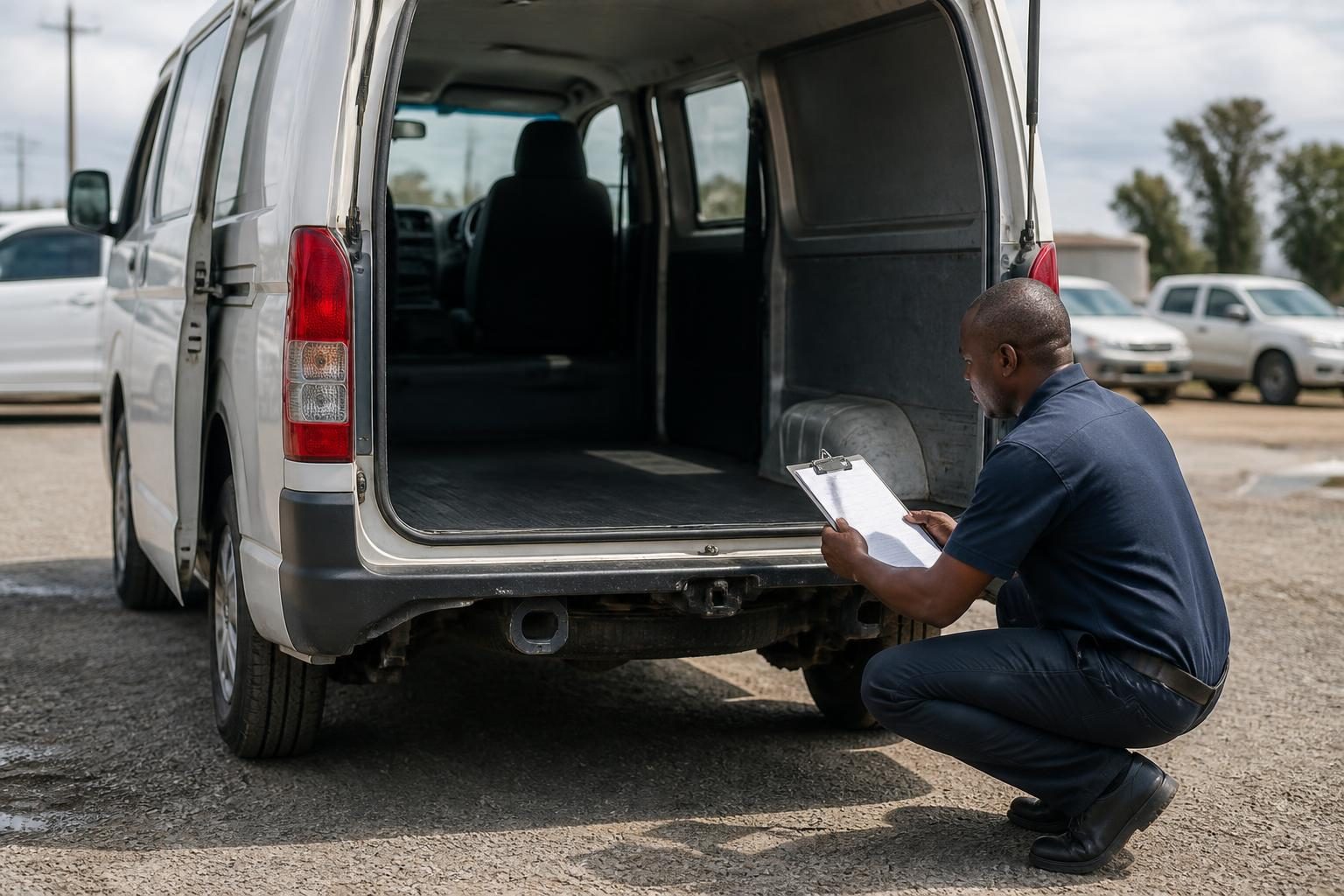 Vehicle inspector checks an open cargo van with a clipboard.
Check these points before committing:
- Cargo-floor dents, repairs and uneven wear.
- Sliding-door rollers and rear-door hinges.
- Suspension sag or an uneven ride height.
- Tyre wear that may suggest poor alignment or overloading.
- Underbody corrosion, especially on vehicles from snowy parts of Japan.
- Oil leaks, smoke, warning lights and transmission behaviour.
- Air-conditioning performance in Dar es Salaam conditions.
- Agreement between the auction sheet, photographs and inspection report.
An auction grade is a useful first filter, not a prediction of future reliability. Read the detailed notes and compare them with the vehicle photographs.
Comparing listed Japanese vans for Tanzania
The import decision should be based on the exact vehicle page, not a general model reputation. In 2026, Tanzania’s import-rules page published RoRo sea transit of 25 to 35 days from Japan to Dar es Salaam, while individual pages state that final delivery is confirmed after quotation (Import Rules and Regulations, 2026).
The listed USD price covers the vehicle, shipping and Japan-side inspection. Import duty, VAT, customs clearance and Tanzania-side requirements remain separate customer costs. Use the vehicle page’s Estimated landed cost in Tanzania panel for a specific estimate rather than relying on a general number.
Use the vehicle page’s landed-cost estimate as a starting point, then confirm the final CIF value, duties, taxes and fees through the official quotation and customs process. For government guidance, check the Tanzania Revenue Authority on customs requirements and the Tanzania Bureau of Standards on applicable standards and certification. Engine size, vehicle age and the exact variant can affect the calculation.
The Carbarn Tanzania service for Japanese vans available for import to Tanzania covers Carbarn-owned Japanese vehicles, two reports before payment, EAA pre-shipment inspection in Japan, RoRo shipment to Dar es Salaam, customer support and payment through Carbarn Japan, plus a dashboard for invoices, inspection sheets, certificates, bills of lading and live vessel tracking. The listed USD price covers the vehicle, shipping and Japan-side inspection, but excludes import duty, VAT and customs clearance. Tanzania’s process may also involve destination-side vehicle verification, standards or certification requirements, customs clearance and registration. Check the applicable requirements with TBS and TRA, then confirm the documents and fees with the appointed clearing agent.
The short answer is simple. Choose the HiAce for heavier, frequent work, the Caravan/NV350 Caravan for a full-size alternative, the NV200 for urban deliveries and the Bongo Brawny for full-size commercial work. Check the engine, drivetrain, seats, cargo layout, auction sheet and landed-cost estimate on the individual vehicle page before deciding.


